Posts

Compliments, Self-Esteem, and Bucket-Filling!
Image
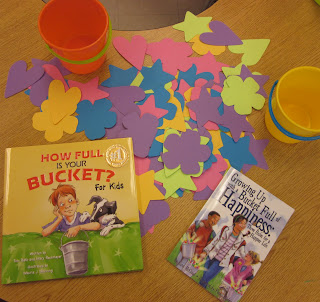
I love all of the different bucket-filling books that exist. I recently used bucket-filling books in the self-esteem group I co-facilitate with my intern. This activity teaches students how to give quality compliments and creates a bucket-filling extravaganza!  Bucket-filling books and supplies Bucket-Filling Books For this activity, I read  Have You Filled a Bucket Today?  by Carol McCloud to students and briefly showed them other examples of how buckets could be filled or emptied from  How Full Is Your Bucket? For Kids  by Tom Rath and Growing Up with a Bucket Full of Happiness: Three Rules for a Happier Life  by Carol McCloud. All of the bucket-filling books are great at explaining bucket-filling and how buckets can be filled or emptied. (Side note:  How Full Is Your Bucket? For Kids  by Tom Rath and  Growing Up with a Bucket Full of Happiness: Three Rules for a Happier Life  by Carol McCloud were received through a...
"It's What's on the Inside That Counts!"

Image
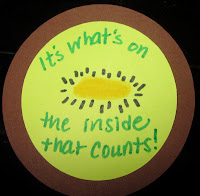
I am currently running a group for children with a loved one in jail. One of the activities I have facilitated with my group is the kiwi lesson.  The kiwi lesson can be used to address many different topics including stigma, shame, diversity, tolerance, body image, and more.  This lesson is fun and engaging. It worked especially well in the context of this group. The idea for the kiwi lesson comes from  The Freedom Writers Diary Teacher's Guide  by Erin Gruwell.  In the book there is a lesson called the "Peanut Game." I decided to use a kiwi instead of peanuts because of how colorful kiwis are on the inside and to avoid any allergies.  At the beginning of the activity I pass out a kiwi to each child. I instruct students to explore the outside of the kiwi and to make a list of as many adjectives as they can that describe the kiwi.  I recommend having students pair up to do this part with one student recording the words at a time.  After ...

Goal Mountain

Image
Looking for a visual way to display students' goals? Goal Mountain serves as a visual reminder that students can take positive "steps" to reach their goals. At the beginning of the Goal Mountain session I explain to students we are going to make a mountain representing our goals and the positive "steps" we can take to reach our goals. As a group we brainstorm some ideas of what types of goals we might have. Students usually suggest future goals, career goals, interpersonal goals and school goals. After we talk about some potential goal ideas, I instruct students to think of a goal they would like to work towards. I give each student a cloud to record their goal. I instruct students to use colored pencils ,  markers , or  construction paper crayons  to record their goal on their cloud. Some examples of students' goals include, "to go to college," "stay in school," "get along with my brothers and sisters more," and "get...

Healing Heart

Image
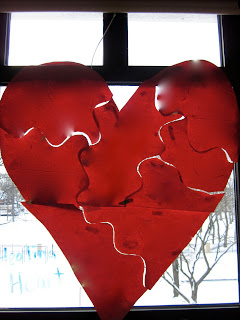
I am currently co-facilitating a grief and loss group with my counseling intern.  The group has been very powerful and I think it has a lot to do with the activities we are doing in the group. One of the first activities we did was a healing heart.  We used large red roll paper to cut out a gigantic heart.  We then cut the heart into squiggly lined pieces. We made enough pieces so that each member of the group and both of us would have a piece.  We then labeled the back of the heart so we would remember how it went back together.  Note: I highly recommend doing that! It made it so much easier to put it back together. During our first group session, we explained to students that everyone in the group has experienced a loss or multiple losses of people they care about.  We passed out a piece of the heart to each student.  We instructed them that they could use the piece of the heart to draw a picture, write a memory, share a message, or decorate ho...

What's Behind the Anger?

Oftentimes school counselors get "angry" kids referred to them and instead of trying to figure out what is behind that anger, we put them in a group to teach them how to manage it.   Anger management groups can be a great way to teach students that anger is a normal emotion. Talking about anger can teach students that they have power over their anger and how they handle it. However, if you want to move beyond anger management , it is important to figure out what is behind the anger. Anger management concerns are often masking a bigger and/or different issue. While facilitating anger management groups last year I realized that the majority of students in my groups had or were currently experiencing the incarceration of a loved one . I was interviewed by Counseling Today and mentioned this in the article . This realization made me much more purposeful about the activities we did in our group.  It also helped me to recruit students for future groups focusing on specific ...

Anger Resources

Image
There are many resources you can use that gives power back into the students' hands and helps them recognize that anger is a normal feeling. At the request of a School Counselor Blog Facebook fan , I have compiled some resources you can utilize in individual sessions, group sessions, and even classroom lessons with students. Seeing Red I have written about Seeing Red: An Anger Management and Peacemaking Curriculum for Kids  a number of times and I can't express enough how much I love this book. I use Seeing Red   with fourth through sixth graders. My colleague uses  Seeing Red , with first through fourth grade.  Each session has activities for younger elementary grades and older elementary grades. Seeing Red   really focuses on what is behind the anger, how you have power over your reaction to angry feelings, and ways that you can cope with that anger.  I really love the  Seeing Red  curriculum and I use some of the icebreaker activities in the...